2019 workshop materials. Dates, affiliations and biographies reflect the original event.
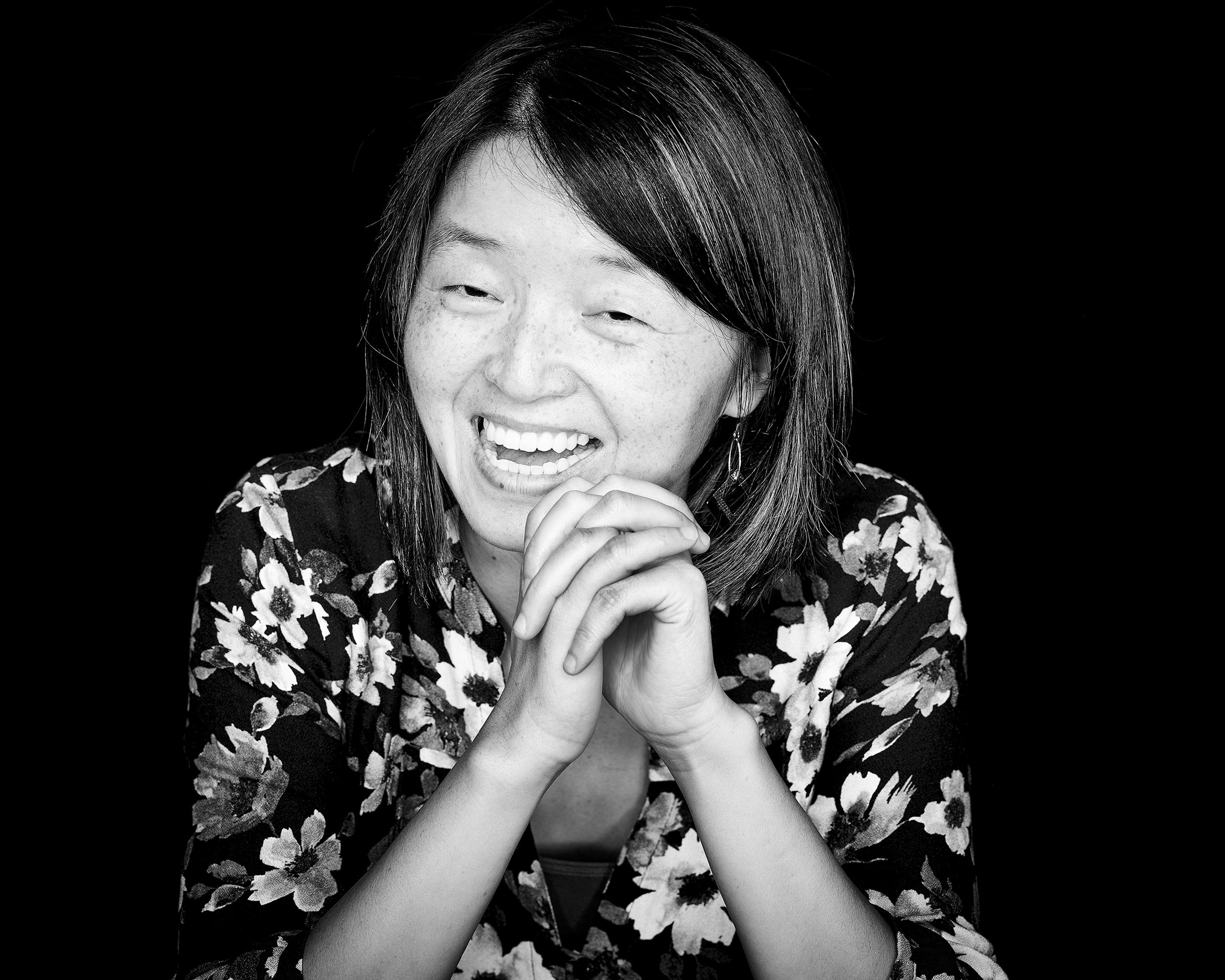
Ya Xu, leads the Data Science team at LinkedIn. This centralized team has 200+ data scientists distributed across the globe, tackling data science challenges across product, sales, marketing, economics, infrastructure and operations. Before LinkedIn, she worked at Microsoft and received a PhD in Statistics from Stanford University. She is passionate about bridging science and engineering to create impactful results. Besides work, she loves spending time with her two little boys. Recently she learnt to love skiing.
Thorsten Joachims is a Professor in the Departments of Computer Science and Information Science, and he is an Amazon Scholar. His research interests center on a synthesis of theory and system building in machine learning, with applications in search, recommendation, and language technology. His past research focused on counterfactual and causal inference, support vector machines, text classification, structured output prediction, convex optimization, learning to rank, learning with preferences, and learning from implicit feedback. He is an ACM Fellow, AAAI Fellow, and Humboldt Fellow.
Ed H. Chi is a Principal Scientist at Google, leading several machine learning research teams focusing on neural modeling, ML Fairness, reinforcement learning, and recommendation systems in Google Brain . He has delivered significant improvements for YouTube, News, Ads, Google Play Store, and other recommenders at Google with more than 100 product launches in the last 2.5 years. With 39 patents and over 120 research articles, he is also known for research on user behavior in web and social media.
Prior to Google, he was the Area Manager and a Principal Scientist at
Palo Alto Research Center's
Augmented Social Cognition Group, where he led the team in understanding how social systems help groups of people to remember, think and reason. Ed completed his three degrees (B.S., M.S., and Ph.D.) in 6.5 years from University of Minnesota. Recognized as an ACM Distinguished Scientist and elected into the CHI Academy, he recently received a 20-year Test of Time award for
research in information visualization. He has been featured and quoted in the press, including the
Economist, Time Magazine, LA Times, and the Associated Press. An avid swimmer, photographer and snowboarder in his spare time, he also has a blackbelt in Taekwondo.
Danai Koutra is an Assistant Professor in Computer Science and Engineering at University of Michigan, where she leads the Graph Exploration and Mining at Scale (GEMS) Lab. Her research focuses on practical and scalable methods for large-scale real networks, and has applications in neuroscience, organizational analytics, and social sciences. Her research interests include large-scale graph mining, analysis of multi-source network data, graph summarization, similarity and matching, and anomaly detection. She won an NSF CAREER award and an Amazon Research Faculty Award in 2019, an ARO Young Investigator award and an Adobe Data Science Research Faculty Award in 2018, the 2016 ACM SIGKDD Dissertation award, and an honorable mention for the SCS Doctoral Dissertation Award (CMU). She holds one "rate-1" patent and has six (pending) patents on bipartite graph alignment. She has multiple papers in top data mining conferences, including 5 award-winning papers, and her work has been covered by the popular press, such as the MIT Technology Review. She is the Program Director of the SIAG on Data Mining and Analytics, an Associate Editor of ACM TKDD, a tutorial co-chair for KDD'19, and a demo co-chair for CIKM'19. At the University of Michigan, she is leading the "Explore Graduate Studies in CSE" workshop, which aims to broaden participation in computer science at the graduate level. She was a demo co-chair for ICDM'18, SIGKDD Cup co-chair in '17, Ph.D. Forum co-chair for ICDM’17, publicity co-chair for SDM'17, and has co-organized 3 tutorials and 3 workshops. She has worked at IBM Hawthorne, Microsoft Research Redmond, and Technicolor Palo Alto/Los Altos. She earned her Ph.D. and M.S. in Computer Science from CMU in 2015 and her diploma in Electrical and Computer Engineering at the National Technical University of Athens in 2010.
Tim Althoff is an assistant professor in the Paul G. Allen School of Computer Science & Engineering at the University of Washington. His research advances computational methods to improve human well-being, combining techniques from Data Mining, Social Network Analysis, and Natural Language Processing. Tim holds Ph.D. and M.S. degrees from the Computer Science Department at Stanford University, where he worked with Jure Leskovec. Prior to his PhD, Tim obtained M.S. and B.S. degrees from the University of Kaiserslautern, Germany. He has received several fellowships and awards including the SAP Stanford Graduate Fellowship, Fulbright scholarship, German Academic Exchange Service scholarship, the German National Merit Foundation scholarship, and a Best Paper Award by the International Medical Informatics Association. Tim’s research has been covered internationally by news outlets including BBC, CNN, The Economist, The Wall Street Journal, and The New York Times.
Nesreen Ahmed is a senior research scientist at Intel Labs. She received her Ph.D. from the Computer Science department at Purdue University in 2015, and her M.Sc. in statistics and computer science from Purdue University in 2014. Her research focuses on the theory and algorithms of large-scale statistical machine learning, graph theory, and their applications in social and information networks. She is currently an associate editor of the IEEE signal processing magazine. In 2018 she was the program committee chair of the IEEE Big Data conference. She also served as the sponsorship chair of the 2019 SIAM international conference on data mining. She was a visiting researcher at Facebook, Adobe research, Technicolor, and Intel analytics. She authored numerous papers/tutorials in top-tier conferences/journals. Her research was selected among the best papers of ICDM in 2015, BigMine in 2012, and covered by popular press such as the MIT Technology Review. She was selected by UC Berkeley among the top female rising stars in computer science and engineering in 2014.